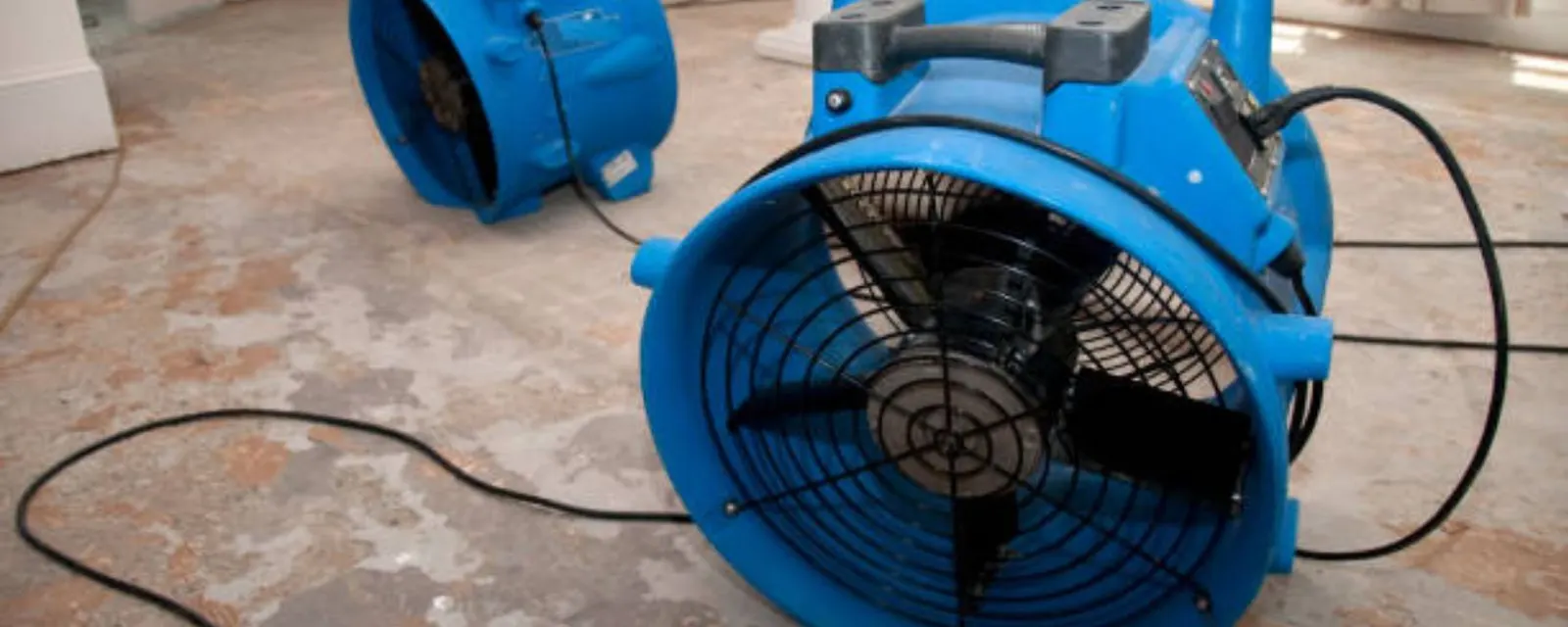
Drying a Building Here
The EPA says in most cases mold will not grow if wet or damp items are dried within 24 to 48 hours. That window is why drying equipment is set up quickly, even before a repair plan exists.
The IICRC page for ANSI/IICRC S500 lists the Fifth Edition (2021) as current and says a consensus body has begun a revision. It covers microbiology, psychrometry and drying, equipment, safety, inspections and documentation for residential, commercial and institutional buildings.
EPA guidance says the wall cavity is the most difficult area to dry, and that it should be ventilated if drywall is left to dry in place. Lehi's dry summer air helps outdoors, but a closed house needs equipment.
Sources: EPA mold course (federal), IICRC S500 page (standards body), EPA guidance on drying drywall (federal).
Why Structural Drying Takes Equipment
Wood framing, subfloor and concrete hold water inside, not on the surface. Opening windows helps a little. It does not reach inside a wall cavity or under a floor.
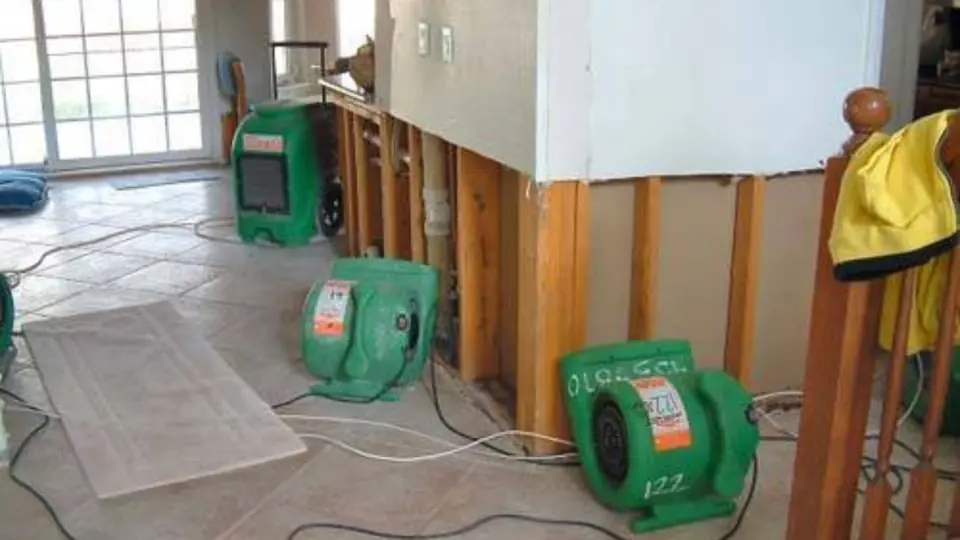
Equipment moves air across wet surfaces to lift moisture, and then it removes that moisture from the air. Without both steps, the water simply returns to the room and soaks back into materials.
How Drying Equipment Works Together
| Equipment | What it does |
|---|---|
| Air movers | Push air across wet surfaces to lift moisture |
| Dehumidifiers | Pull moisture out of the air so drying continues |
| Moisture meters | Read moisture inside wood, board and concrete |
| Thermal camera | Shows cooler, wetter areas behind surfaces |
| Hygrometer | Reads temperature and humidity in the room |
The numbers from these tools guide the equipment count and when to stop.
Dehumidifiers work best in a closed space, so windows and doors are kept shut while drying runs. A room with open windows is fighting the weather.
Safety Steps: Before Drying Equipment Goes In
- Stop the water source and remove standing water.
- Turn off power to wet areas, and keep cords out of any water.
- Check for older materials before disturbing board or flooring.
- Move furniture and valuables.
- Call a crew to plan equipment and circuits.
Monitoring Until the Structure Is Dry
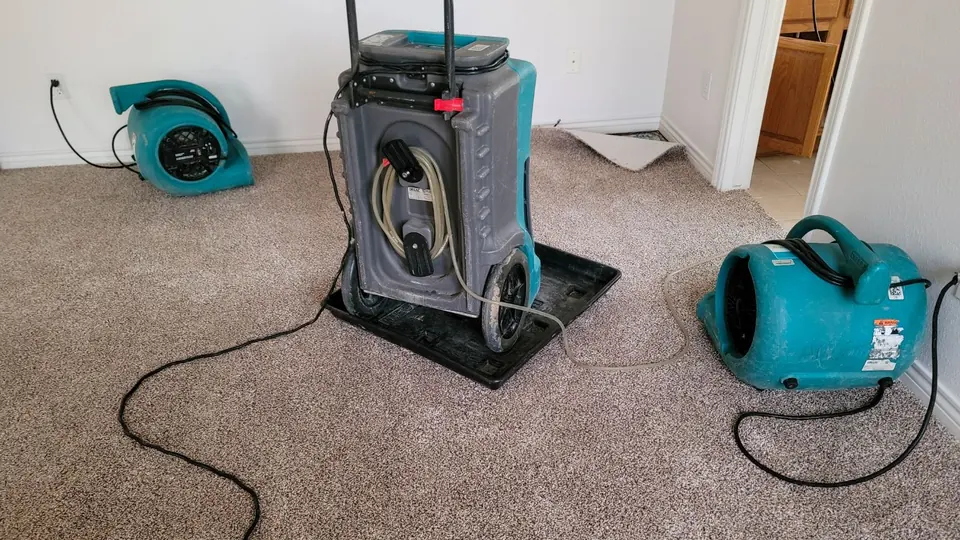
A crew returns to read moisture, check humidity and adjust equipment. They compare readings with an unaffected reference wall or floor in the same building. A line of readings that stops falling and matches the reference means drying is done.
If walls still read wet, equipment may be moved or a wall opened. The crew keeps a log, which you can share with your insurer.
Map
Meters and thermal imaging find the wet areas.
Place
Air movers and dehumidifiers are set to suit the layout.
Read
Daily readings show how fast each area is drying.
Finish
Equipment is removed when readings match the dry reference.
Need a building dried?
Call and describe what is wet. A crew will explain equipment, visits and readings before work starts.
Call (385) 988-9410What Changes the Cost
- The size of the wet area and the number of rooms
- The materials, since concrete and thick wood dry slowly
- How many air movers and dehumidifiers are needed
- The number of days and visits for readings
- Whether walls or floors must be opened
Insurance and Drying Records
Insurers often ask for proof that drying happened. A log with dates, readings and equipment counts is the clearest proof. Keep it with your photos and invoices.
Your policy decides what is covered. We do not predict an insurer's decision.
Mistakes to Avoid
- Do not turn the heat up very high and hope the building dries
- Do not close walls or put down flooring before readings are dry
- Do not use too few fans and call the job done
- Do not stop a dehumidifier when the room feels dry
- Do not skip the final readings
This page pairs with water mitigation and emergency water removal. See wall and drywall water damage repair for the repair step. We serve American Fork and Saratoga Springs too.
Common Questions
Yes. Calls are taken day and night, and a same-day setup is possible when a crew is free. We do not promise a time of arrival.
It depends on the materials and the amount of water. Readings tell you, and a typical job runs several days.
Fans lift moisture into the air. Dehumidifiers remove it, so the moisture does not return.
We do not rent equipment. Without readings, hidden wet areas are easy to miss.
Readings match a dry reference material in the same building, and the crew shows you the numbers.