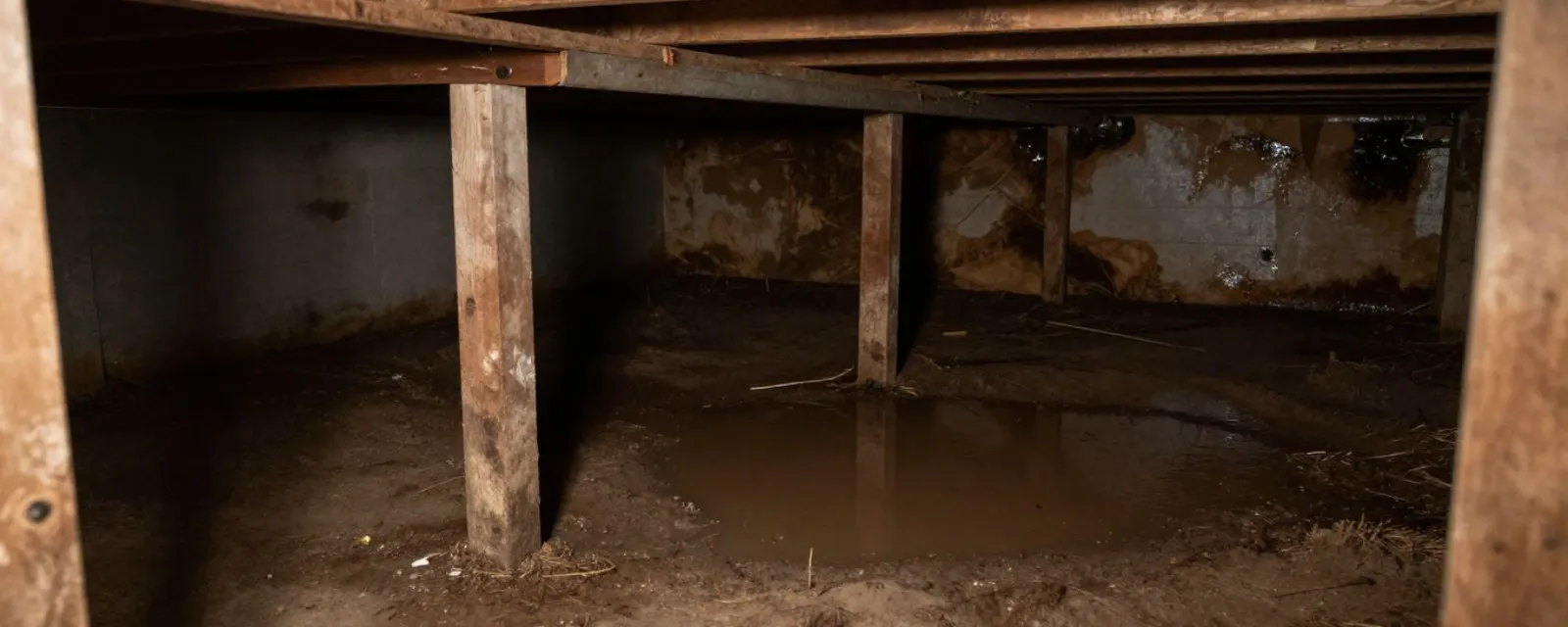
Crawl Spaces and Groundwater Near Lehi
We could not find a source for how many Lehi homes have crawl spaces rather than basements, so we give no figure. If your home has one, or an addition built over one, this page applies. When one fills with water, the cause is often a plumbing failure, a window well or runoff, and sometimes shallow groundwater.
The Utah Geological Survey describes Wasatch Front valleys as having saturated soils and shallow groundwater in places. That is general state information and not a map of any particular street, and it is a reason to ask for a site check if water keeps returning.
KSL reported in June 2010 that an irrigation canal near Lehi overflowed, with water entering homes near the canal and residents calling it the worst flooding in 20 years. The EPA recommends keeping indoor humidity below 60 percent, ideally between 30 and 50 percent, a range a damp crawl space can easily exceed.
Sources: Utah Geological Survey (state agency), KSL (news, June 2010), EPA mold and moisture guide (federal).
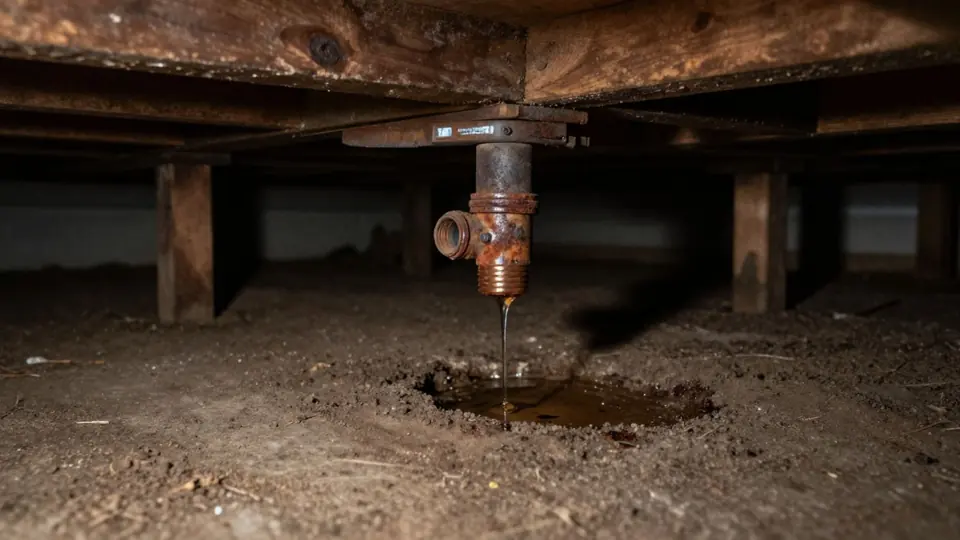
Where Crawl Space Water Comes From
- A supply or drain pipe that split under the floor
- Runoff or snowmelt that enters through a vent or access well
- A high water table that rises with spring melt
- A downspout or grading problem next to the foundation
- A water heater, sink or tub leak above that drips down
Finding the source is the first job. Pumping a crawl space that is still being fed only gives you a short break.
What You See and Smell
A musty smell in the house, cold floors, a sagging floor or soft spots can all point to a wet crawl space. Pests may appear. Insulation hanging down or visible mold on joists means the problem has been there a while.
Do not crawl in if you smell sewage or gas, if the space is full of water or if wiring is near the water. Use a flashlight from the access and call.
Safety Steps: Before Anyone Goes Under the House
- Shut off the main water if a pipe may have split.
- Turn off power to the crawl space lights and outlets before going near water.
- Do not enter a space with standing water over wiring or ductwork.
- Wear gloves, boots and an N95 respirator if you must look in the access.
- Photograph what you can see and call a crew.
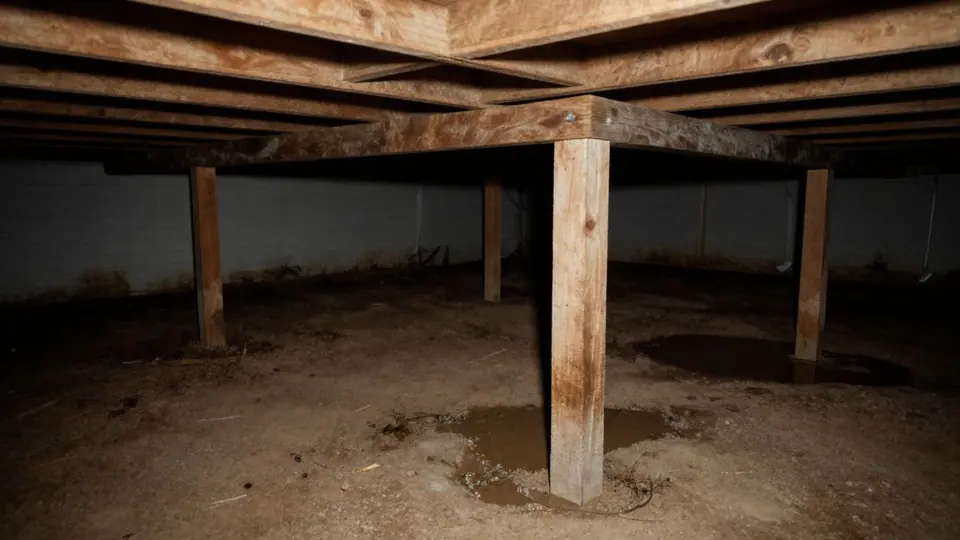
Drying a Crawl Space
Pumps and a submersible unit remove standing water, and wet vacuums handle the rest. Wet insulation and any damaged vapor barrier are removed, since they hold moisture against the floor above.
Dehumidifiers and air movers then run. Moisture readings on joists and subfloor are logged until they match dry reference material.
Locate the source
A plumber or crew finds the leak or the entry point for runoff.
Pump
Standing water is removed with pumps.
Strip
Wet insulation and vapor barrier are taken out.
Dry and log
Equipment runs until joist and subfloor readings match dry reference material.
The published ANSI/IICRC S500 standard is the reference we name for drying work in tight, low spaces. Repairs to a vapor barrier, grading or drainage are separate jobs and are best finished before the space is closed up.
Water under the floor right now?
Keep out of the space, shut off the main if a pipe split, and call. Dispatch is open 24/7.
Call (385) 988-9410What Changes the Cost
- Crawl space height and how hard it is to work in
- Depth of water and how fast it returns
- Insulation and vapor barrier that must be removed
- Whether the source is fixed
- Days of drying and trips for readings
Insurance and a Wet Crawl Space
The Utah Insurance Department says flood damage is generally not covered by a standard homeowners policy and that a separate flood policy is needed. A plumbing failure under the floor is a different type of loss. Which applies depends on how the water got there.
Photos, a record of when you noticed it and receipts for pumping help your insurer sort it out.
Prevention and Mistakes to Avoid
- Keep downspouts discharging away from the foundation
- Check the crawl space after storms and during spring melt
- Do not close a wet space with new insulation
- Do not leave a torn vapor barrier on damp soil
- Do not walk in standing water near wiring
Read water mitigation for the wider process, or structural drying for the equipment. We serve Pleasant Grove and American Fork as well.
Common Questions
Yes. Calls are taken at any hour, and a same-day crew is possible when one is free. No arrival time is promised.
We pump, strip and dry. A plumber or landscaper fixes pipes and grading, and we coordinate the order.
Standing water over wiring, a sewage smell or ongoing flow is urgent. Call right away.
No. A dehumidifier helps once the water is out and the source is stopped.
Dry the space first. A barrier on damp soil traps moisture and can make the problem worse.