Cooling Season in Lehi
Air conditioners work hard here in summer. NOAA's 1991 to 2020 climate normals for the Provo BYU station show an average July high of 95.2 degrees and about 27 days at or above 90 degrees in July. That station is about 20 miles from Lehi, so treat the numbers as regional.
That means a system runs for months, and the condensate drain line is working every one of those days. A coil pulling moisture from air can make several gallons of water a day in humid weather and far less in dry air.
Utah's state code lists the editions of the International Mechanical Code and Residential Code it adopts in Utah Code 15A-2-103. A Connecticut state building advisory on the 2021 residential code says a secondary drain or auxiliary pan is required where an overflow could damage the building. Ask Lehi Building and Inspections how Lehi applies the code to your system.
Sources: NOAA NCEI 1991 to 2020 normals (federal), Utah Code 15A-2-103 (state statute), Connecticut Office of the State Building Inspector advisory (another state, used as general reference).
How Common Are AC Leaks Here?
An AC leak is one of several ways water gets into a house, and it usually involves an attic air handler or a closet furnace with an evaporator coil. If your leak came from a cooling system, this page applies. If water is in the basement, start with emergency water removal instead.
Why Air Conditioners Leak
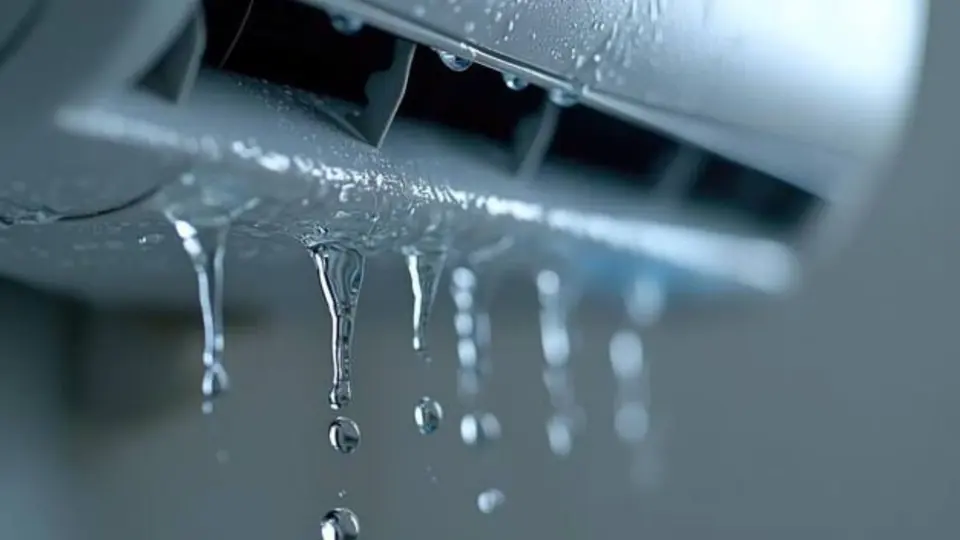
- A clogged condensate drain line that backs up into the pan
- A cracked or rusted drain pan under the evaporator coil
- A frozen coil that melts and overwhelms the pan
- A pump that fails on a system with a condensate pump
- A disconnected or sagging drain line
Dirt, algae and insects are the usual cause of a clogged line. The pan fills, and without a safety switch the water spills onto the platform, the ceiling or the floor.
What Water From an AC Leak Does
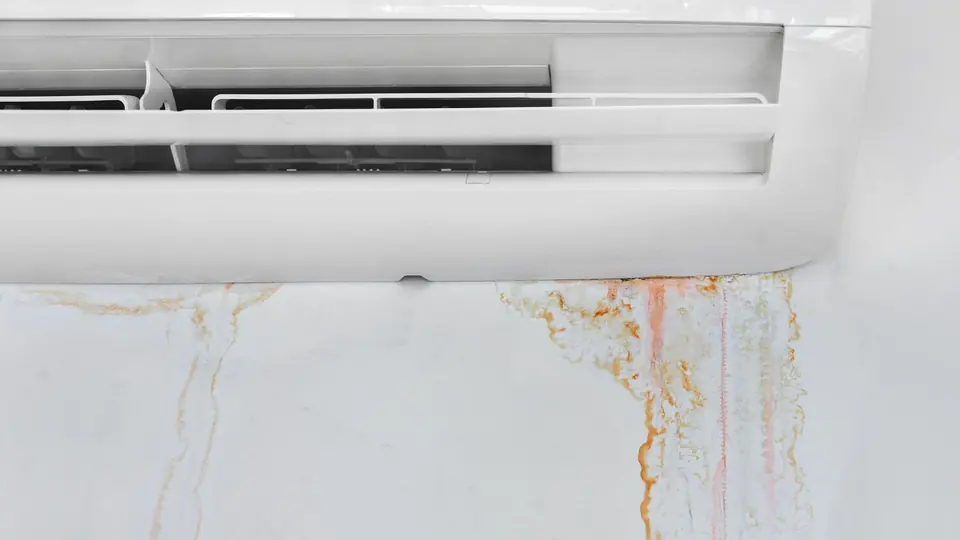
Condensate is mostly clean water, but it can carry algae and dust from the coil and pan. In an attic, it soaks insulation and the ceiling board below. In a closet, it runs under the wall into the floor.
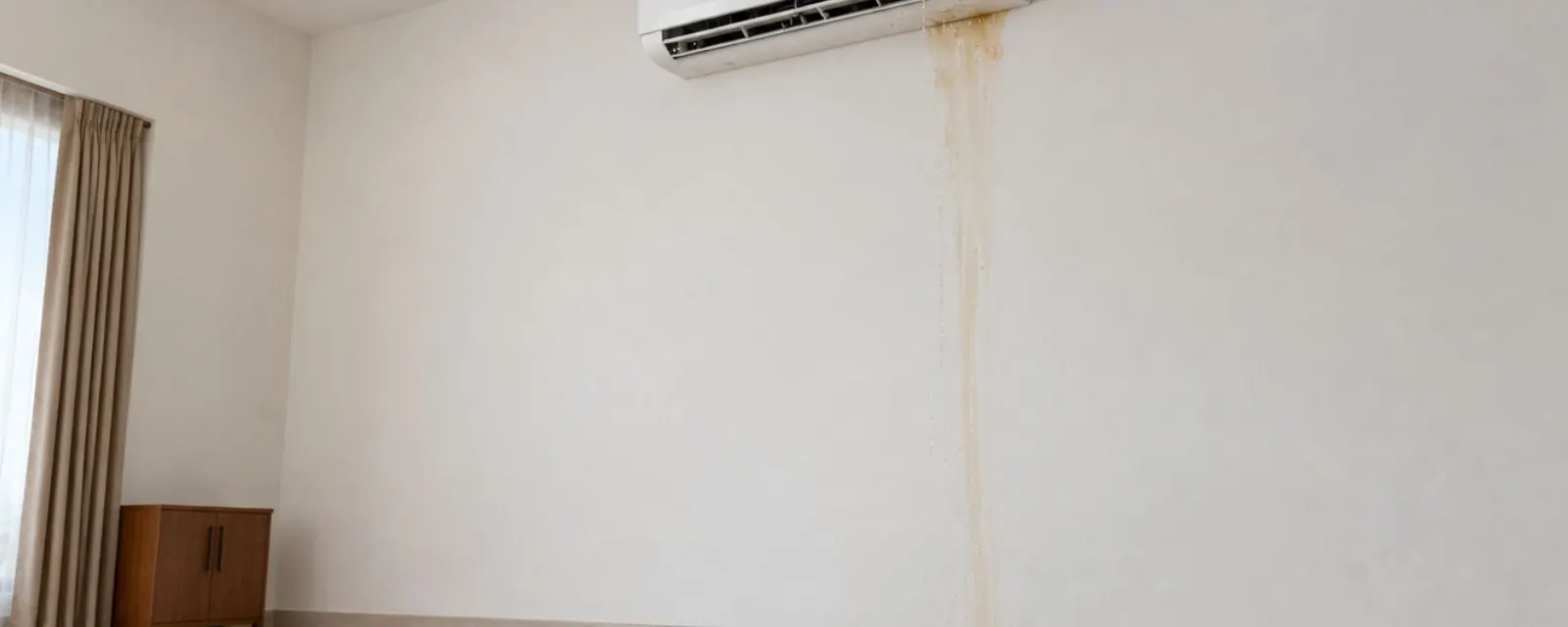
Because the leak is steady and slow, the damage can build for weeks. Stains, a musty smell or a sagging ceiling below the air handler are the usual signs.
Safety Steps: The First Hour With an AC Leak
- Turn the thermostat to off and shut off power to the air handler at its switch or breaker.
- Stop the water by clearing a visible clog in the drain, only if you can reach it safely.
- Place a bucket or towels under the drip and keep people away from a bulging ceiling.
- Do not run the system again until a technician checks the drain and pan.
- Photograph the unit, the pan, the stain and the ceiling.
Stain under the air handler?
Turn the system off, then call. We dry the structure while an HVAC technician fixes the drain.
Call (385) 988-9410How the Damage Is Dried
Find the extent
A moisture meter and thermal camera follow the water through insulation, board and framing.
Remove wet material
Insulation and ceiling board that stayed wet are removed and bagged.
Dry
Air movers and a dehumidifier run with logged daily readings.
Hand off
Once the structure is dry, the repair crew or homeowner rebuilds the ceiling or wall.
Drying follows ANSI/IICRC S500, the published industry reference, which we name here as a reference and not as a credential. An HVAC technician repairs the drain, pan or coil, and we coordinate drying around that visit.
What Changes the Cost
- How long the system leaked before it was noticed
- How much insulation and ceiling board is wet
- Whether the water reached the room or floor below
- How tight the attic or closet is for equipment
- Number of drying days and visits for readings
Insurance and AC Leaks
A sudden drain failure and a long, slow leak are often treated differently. Many policies exclude damage that accumulates over a long time. Ask your insurer how it treats condensate overflow.
Keep the HVAC invoice and photos of the clogged line or cracked pan. They show the cause, which the adjuster may want.
Prevention and Mistakes to Avoid
- Have the drain line flushed during a spring service visit
- Ask a technician about a float switch that shuts the system off
- Do not ignore water in the pan during a heat wave
- Do not use bleach on the line without checking with a technician
- Do not run a system with a known leak
Related topics are on structural drying and dehumidification and water damage cleanup. We serve Saratoga Springs and Eagle Mountain, where newer homes often have attic air handlers.
Common Questions
Yes. The dispatcher answers at any hour and sends a crew the same day when one is free. No arrival time is guaranteed.
No. An HVAC technician repairs the system. We dry and remove wet materials.
It is mostly clean water, but it can carry algae and dust. Wet material should still be dried within a day or two.
The pan or drain line is likely overflowing onto the ceiling board. Turn the system off and call.
It depends on the cause and the policy language. Sudden failures are often treated differently from long-term leaks.